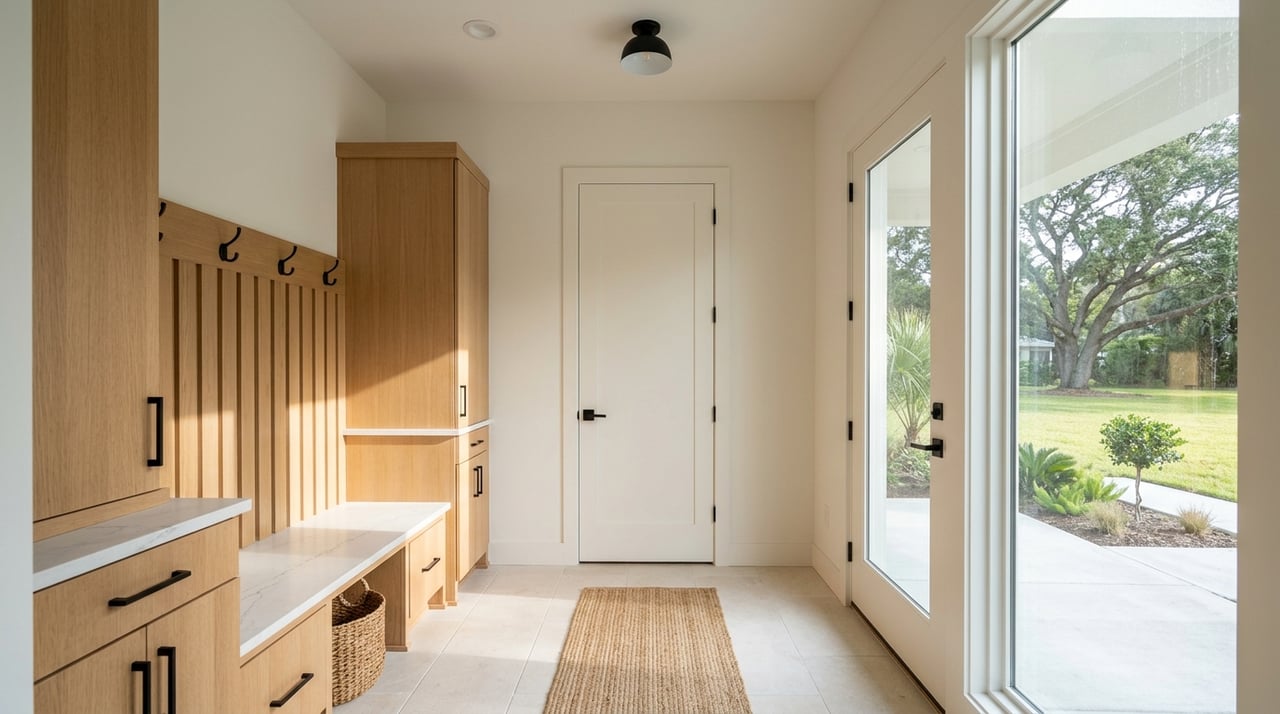
Is Plant City the Right Next Step for Move-Up Buyers?
May 7, 2026
May 7, 2026
If you are craving more square footage, a bigger yard, or even acreage without giving up access to the Tampa-Lakeland corridor, Plant City is worth a close look. Many move-up buyers want more room, but they do not want to trade convenience for it. The good news is that Plant City offers a mix of space, housing variety, and regional access that can make that next step feel realistic. Let’s dive in.
Plant City sits in eastern Hillsborough County, about 25 miles east of Tampa, just west of Lakeland, and about 70 miles west of Orlando. That location matters if you want a home that feels less dense day to day while still keeping major job centers and airports within reach.
Local economic development materials highlight I-4 access, along with the city’s role in agriculture, manufacturing, and distribution. In practical terms, that gives Plant City a corridor-based lifestyle. You may have more space at home, but you are still connected to the larger Central Florida region.
Census QuickFacts also supports that picture. Plant City’s 2024 population estimate is 43,046, the owner-occupied housing rate is 66.4%, median household income is $67,439, and the mean travel time to work is 28.2 minutes. Together, those numbers suggest a homeowner-oriented community where commuting is a normal part of daily life.
A move-up market is not just about buying a more expensive house. It is about improving how you live. In Plant City, that often means more interior space, more lot options, or a better fit for a changing lifestyle.
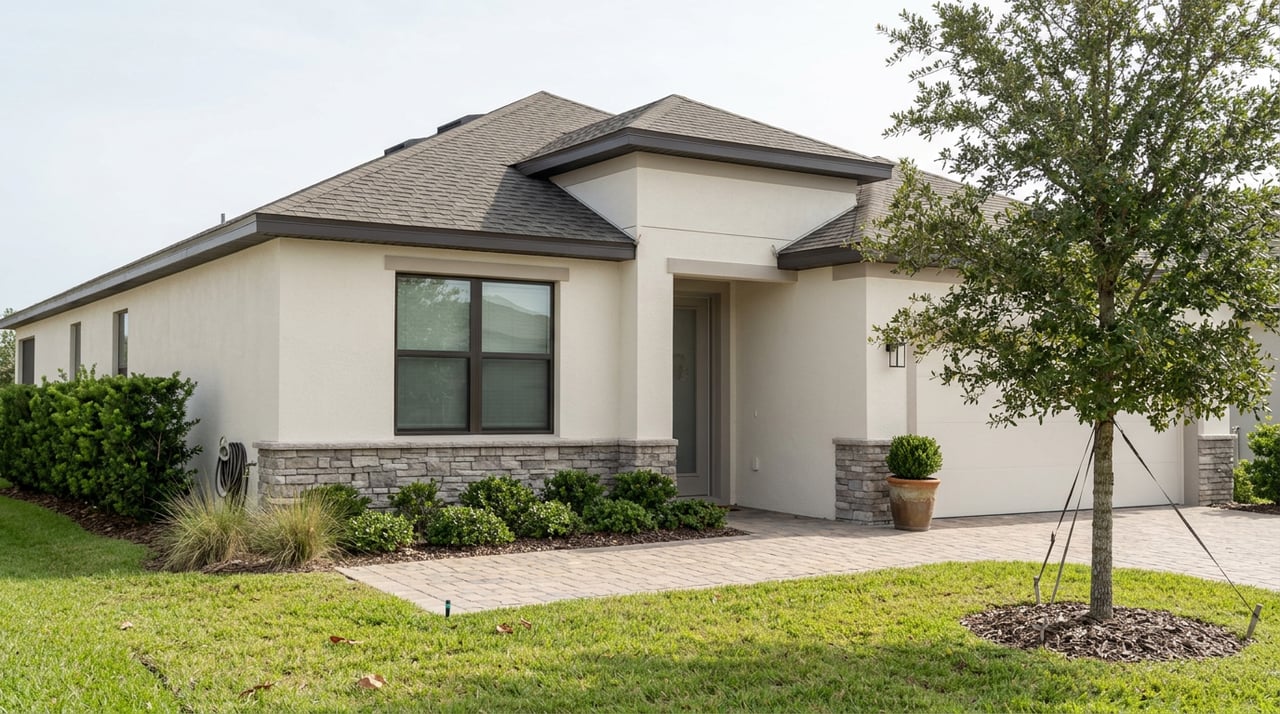
The city’s adopted 2040 comprehensive plan says Plant City remains predominantly single-family in character. Single-family detached homes are still the preferred housing type, though townhomes, cluster development, zero-lot-line homes, and apartments are part of the mix too. That matters because you are not limited to one kind of move-up path.
You may be looking for a newer home in a conventional subdivision. You may want more bedrooms, a home office, a larger lot, or a property with land for a different lifestyle setup. Plant City can support several versions of that goal.
Current listing examples show the range clearly. Some homes fall into a more typical suburban size band, such as 3-bedroom, 2-bath homes around 1,664 to 2,146 square feet, while other listings include parcels around 7.51 acres or 10 acres. That kind of spread is one reason Plant City stands out for buyers who want options.
The strongest case for Plant City is simple: it offers a blend of elbow room and connectivity. It is not fully rural, and it is not an urban core. Instead, it sits in a middle ground that appeals to buyers who want more land or a calmer physical setting while staying tied to the region.
Plan Hillsborough’s updates suggest that growth is not slowing down. The city has already seen a 15% population increase and 39% employment growth since 2016, with projections for significant additional growth by 2050. That means Plant City is still evolving, and today’s buyers are making decisions in a market that is actively taking shape.
For some households, that is a plus. Buying in a place with room to grow can create more housing choices and more ways to match your budget with your priorities. It also means you should pay close attention to where growth is expected and how that may affect your experience over time.
Plant City is not a one-price, one-style market. That is important if you are selling one home and trying to buy your next one carefully.
Spring 2026 portal data places Plant City in the mid-$300,000s, though the exact figure depends on the source. Redfin reports a March 2026 median sale price of $338,465 and about 60 days on market. Zillow shows a typical home value of $340,765 with 303 active listings and 46 days to pending. Realtor.com reports a median listing price of $385,000, a median sold price of $340,477, about 600 active listings, and 75 median days on market.
The exact numbers differ because the platforms use different methods and update schedules. Still, the shared takeaway is clear: Plant City has real inventory. This is not a market defined by near-zero supply.
That matters for move-up buyers because inventory creates choice. It can also make a sale-and-purchase transition more manageable, especially when you are trying to line up timing, budget, and negotiation strategy.
Another helpful sign is the price spread inside the city. Realtor.com neighborhood examples show Improvement League of Plant City around $345,000, Country Hills around $289,950, and Walden Lake around $472,000.
That range shows Plant City is not uniform. Some areas may offer a more accessible step up, while others may support a larger jump in home size, lot size, or setting. If you are planning a move-up purchase, that variety can help you compare tradeoffs more clearly instead of assuming the whole city fits one price point.
This is one of the biggest mistakes move-up buyers can make in Plant City: assuming every property comes with a large yard or land just because of the city’s overall character. It does not work that way.
Plant City’s planning materials make an important distinction between future land use and zoning. The future land use map is broad, but zoning is what actually controls building type, lot size, setbacks, and similar details. In plain terms, you need to verify the specific parcel rather than rely on the address alone.
That is especially important if your goal is acreage, room for outbuildings, or a lower-density setting. The city recently created Agricultural/Residential-1 and Agricultural/Residential-2 future land use categories at 1 and 2 dwelling units per gross acre. Planning discussion around those categories noted support for farmsteads, ranches, parks, and large-lot single-family sites.
That is useful context, but it is still not a substitute for parcel-level due diligence. If lot size is a top priority, verification should be part of your decision process from the beginning.
The adopted comprehensive plan says most new residential growth is expected east of Paul Buchman Highway and north of I-4, with vacant land in the northeast and southeast quadrants remaining part of the city’s growth picture.
Why does that matter to you? Because a move-up purchase is not only about the house you buy today. It is also about the setting around it over the next several years. A home in a more established subdivision may feel very different from a property in an area where future development is still unfolding.
Neither choice is automatically better. The right fit depends on whether you want a more built-out environment, more land-oriented surroundings, or a location that may change more noticeably as the city grows.
Plant City offers more than just housing. The city describes itself as blending agriculture, manufacturing, and distribution with big-town amenities and small-town charm. It is also known for the Florida Strawberry Festival, which draws more than half a million visitors each year.
The city’s economic development profile also points to nearby hospitals and college access, giving Plant City a broader everyday-services base than a purely rural town. For many buyers, that creates a practical middle ground. You can gain space without feeling cut off.
Still, Plant City is best understood as a car-based corridor community. If your ideal daily pattern depends on dense walkability, frequent transit, or a fully urban setting, this may not be your strongest match. If you want more room and a more relaxed physical environment while staying connected to major routes, it may fit very well.
A smart move-up decision usually comes down to a few practical questions. Plant City gives you more ways to answer those questions, but it also requires clear thinking.
Before you fall in love with a property, confirm the actual lot size and zoning. If your goals include land, flexibility, or lower density, this step is essential.
Ask whether the home is in a conventional subdivision or a lower-density edge area. The answer can shape everything from your privacy to the pace of nearby development.
Plant City’s regional access is one of its biggest advantages, but commute quality depends on your actual route. The city’s location and average commute time are helpful context, yet your origin and destination still matter most.
With hundreds of active listings and typical days on market running roughly from 46 to 75 days across major portals, there may be room for thoughtful negotiation. Even so, this is not a market where timing takes care of itself. A clear strategy matters when you are buying and selling at the same time.
Plant City looks like a strong candidate if you want more space, more lot diversity, and access to the Tampa-Lakeland corridor. It is especially appealing if your next move is about improving how you live rather than just changing ZIP codes.
It may be a weaker fit if your top priorities are dense walkability, transit-based living, or a highly urban daily routine. But if you are looking for a broader housing mix, a predominantly single-family environment, and the chance to stretch out without losing regional access, Plant City deserves a serious look.
The key is matching the market to your real priorities. That means looking beyond the headline price and asking how the property, parcel, commute, and future surroundings all work together for your next chapter.
If you want a calm, strategic look at whether Plant City fits your move-up goals, Melissa Connell can help you compare options, think through timing, and move forward with clarity.
Stay up to date on the latest real estate trends.
I provide strategic assistance with pricing analysis, offer preparation, contract drafting, and negotiation ensuring every decision is informed and advantageous. Let’s begin the conversation.
Get In Touch With Palm & Pine Realty Group To Learn More
PALM & PINE REALTY GROUP
(813) 478-3180
[email protected]
Office - [email protected]
Sellers - [email protected]
Buyers - [email protected]
CENTRAL & NORTH CENTRAL FLORIDA