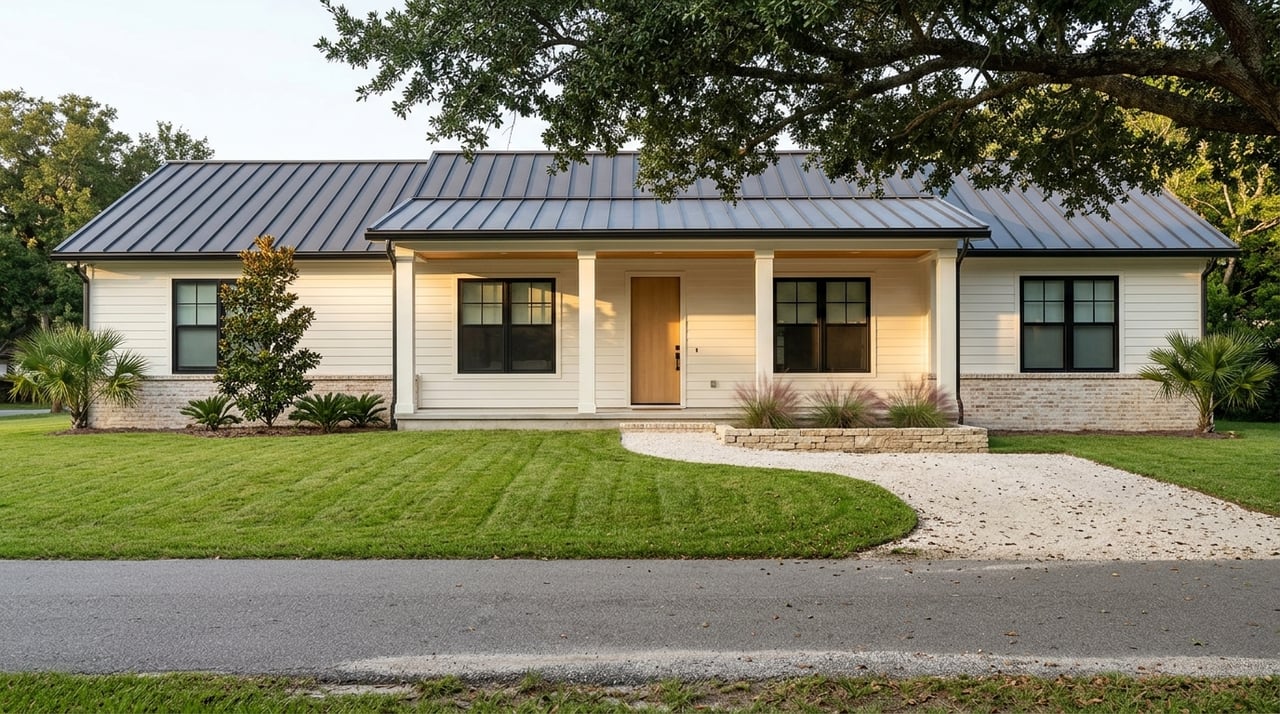
Dade City and Zephyrhills vs Tampa Suburbs: How They Compare
April 23, 2026
April 23, 2026
If you are deciding between Dade City, Zephyrhills, and the suburbs closer to Tampa, you are really weighing one big tradeoff: space versus convenience. Many buyers want more room, a calmer setting, or a different daily pace, but they also need to stay realistic about commute times and access to the metro area. This guide will help you compare these areas in a clear, practical way so you can narrow down what fits your lifestyle and priorities best. Let’s dive in.
At a high level, Dade City and Zephyrhills are both less dense than Tampa and many of its closer-in suburbs. According to the U.S. Census Bureau, Dade City had an estimated 2024 population of 9,662 and a density of 1,177.9 people per square mile, while Zephyrhills had 22,304 residents and a density of 1,808.8 people per square mile. Tampa, by comparison, had 384,959 residents and a density of 3,376.4 people per square mile.
That difference matters because density often shapes how a place feels day to day. Lower-density areas can feel more open, less urban, and a bit slower paced. At the county level, Pasco County also has a lower population density than Hillsborough County, which helps explain why communities north of Tampa often offer a different experience than suburbs closer to the city.
For many buyers, one of the biggest reasons to look north is the possibility of getting more house-and-land value. Census data shows Pasco County’s median owner-occupied home value was $300,900, compared with $371,500 in Hillsborough County and $420,400 in Tampa. That does not mean every home in Dade City or Zephyrhills costs less, but it does support the broader pattern that moving north may give you more space for your budget.
If you are searching for a larger yard, more breathing room between homes, or a property with a less compact feel, that pattern is worth paying attention to. It is especially relevant if you are comparing north Pasco options with more built-out suburban areas closer to Tampa.
Dade City stands out for its lower-density single-family zoning pattern. According to the city’s zoning standards, RS-1 requires 10,000-square-foot lots, RS-2 requires 8,500 square feet, and RS-3 requires 6,500 square feet.
In practical terms, that points to a housing pattern that often prioritizes larger lots over maximum density. If your goal is to find a home that feels less compressed than a typical metro subdivision, Dade City may be one of the stronger fits in the north-of-Tampa conversation.
Zephyrhills offers a more mixed housing pattern. Its land development code allows single-family lots as small as 5,500 square feet, zero-lot-line homes at 3,500 square feet, townhouses at 1,000 square feet, and multifamily at 5,000 square feet.
That flexibility creates more variety for buyers. You may still find conventional suburban homes, but you may also see more compact options than you would typically expect in Dade City. For some buyers, that balance is appealing because it can offer a town setting with a broader range of price points and property styles.
Compared with Dade City, suburban development patterns closer to Tampa often lean more compact. Hillsborough County development rules show standards that support smaller and denser lot configurations, including cluster development patterns tied to 8,000-square-foot thresholds and even denser standards for lots below 5,000 square feet.
That does not mean every Tampa suburb has small lots. It does mean the broader suburban pattern often emphasizes efficiency, access, and housing concentration more than yard size. If you want to stay closer to jobs, shopping, and the urban core, that tradeoff may still make sense for you.
One of the clearest differences between these locations is commute time. The Census Bureau reports a mean travel time to work of 34.6 minutes in Dade City, 31.6 minutes in Zephyrhills, 31.1 minutes in Pasco County, 28.8 minutes in Hillsborough County, and 24.8 minutes in Tampa. Zephyrhills is also identified by its official city site as being 29 miles from Tampa.
If you move farther north, you are often making a conscious choice to trade shorter drives for more space or a different setting. That does not make one option better than another. It simply means your daily routine should be part of the home search, not an afterthought.
Dade City has the strongest small-town identity of the three options in this comparison. The city’s Church Street Historic District dates back to the 1880s and is recognized for its turn-of-the-century architecture, and the city maintains a Historic Preservation Advisory Board.
For buyers, that can translate into a place with a more traditional historic core and a stronger sense of small-town continuity. If you are drawn to older downtown areas, established character, and a less urban pace, Dade City may feel more aligned with what you want.
Zephyrhills also has a historic downtown presence, including Clock Plaza in the historic downtown district and an active historic preservation program. That gives it a town-center element while still supporting a broader mix of housing forms than Dade City.
This often makes Zephyrhills feel like a middle ground. You can get some of the identity and structure of a distinct town while still seeing more varied suburban housing options. For buyers who want flexibility without moving as far into a purely metro-oriented pattern, that can be a useful balance.
Based on the density, zoning, commute, and historic-district information in the research, each area tends to fit a different kind of buyer goal.
Dade City is often the better match if you want:
Zephyrhills may be the better choice if you want:
Suburbs closer to Tampa often make more sense if you want:
If you are stuck between these areas, try ranking your priorities in order. Start with commute tolerance, then lot size, then the kind of setting you want around you every day. That simple exercise usually makes the tradeoffs clearer.
Here is a practical framework:
A home can look perfect online, but if the location does not support your day-to-day routine, it may not be the right long-term fit. The goal is not just to buy a house. It is to choose the setting that supports how you actually want to live.
Comparing Dade City, Zephyrhills, and Tampa suburbs is not just about map distance. It is about understanding the tradeoffs between density, land use, commute patterns, and neighborhood feel. Those details can shape your budget, your routine, and how satisfied you feel after the move.
If you want a calm, strategic plan for comparing homes in Pasco County and the greater Tampa area, Melissa Connell can help you evaluate your options with clarity and confidence.
Stay up to date on the latest real estate trends.
I provide strategic assistance with pricing analysis, offer preparation, contract drafting, and negotiation ensuring every decision is informed and advantageous. Let’s begin the conversation.
Get In Touch With Palm & Pine Realty Group To Learn More
PALM & PINE REALTY GROUP
(813) 478-3180
[email protected]
Office - [email protected]
Sellers - [email protected]
Buyers - [email protected]
CENTRAL & NORTH CENTRAL FLORIDA