Buying Nature Coast Land: A Smart Due Diligence Checklist
May 14, 2026
May 14, 2026
Buying land or waterfront property in North Central Florida can feel exciting right up until the questions start piling up. Can you build what you want? Is there legal access? Will you need a well, septic system, flood insurance, or shoreline permits? If you are looking in places like Homosassa, Crystal River, Inglis, Dunnellon, Chiefland, Bronson, Archer, and nearby Nature Coast areas, doing your homework early can protect your budget and your long-term plans. Let’s dive in.
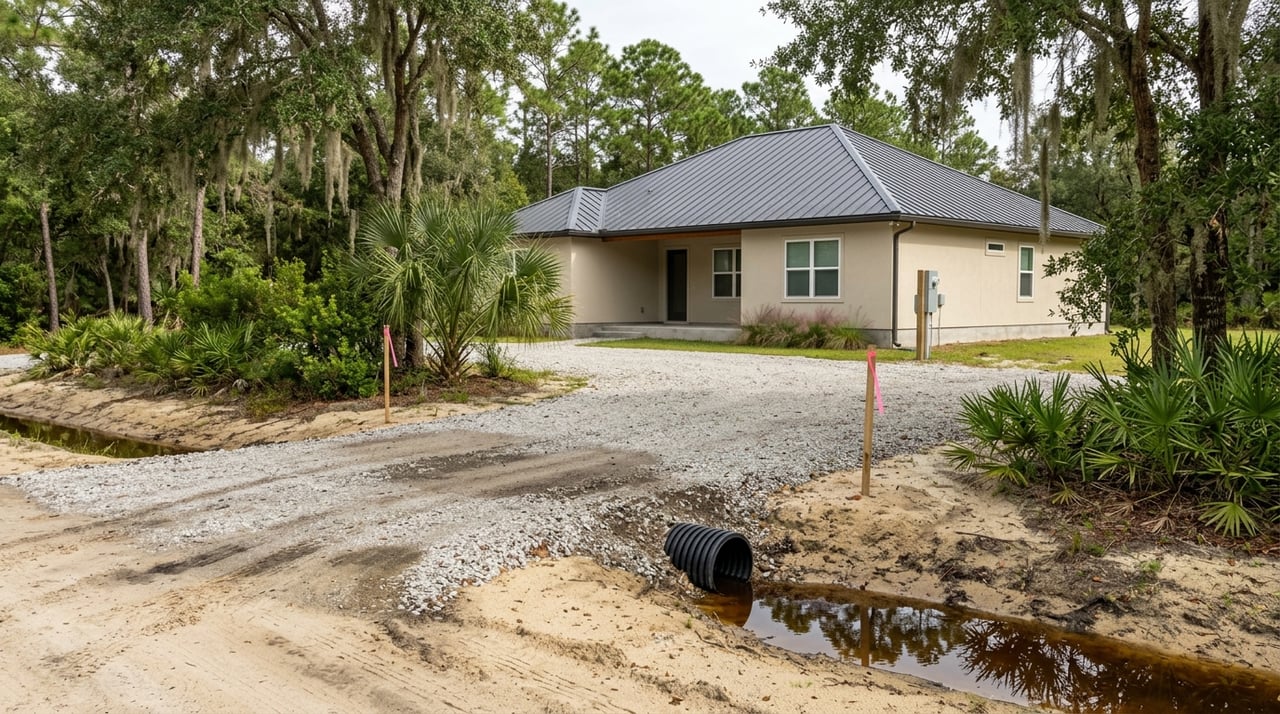
Land and waterfront parcels in North Central Florida often come with more moving parts than a typical resale home. Flood exposure, wetlands, shoreline rules, utilities, access, and recorded restrictions can all affect whether a property fits your goals.
That is especially important in the Nature Coast, where the exact parcel location can change which rules apply. Depending on where the property sits, oversight may involve the St. Johns River Water Management District, Suwannee River Water Management District, or Southwest Florida Water Management District, along with county or local permitting offices.
Before you schedule inspections or fall in love with a view, get clear on how you want to use the property. Your intended use shapes nearly every part of due diligence, from zoning and access to utilities, permitting, and environmental review.
A strong Florida vacant-land contract gives you time to evaluate whether a parcel fits your plans. That review can include zoning, deed restrictions, soil and grade, road access, water and utilities, permits, growth-management rules, and environmental conditions.
If your plans involve agriculture or heavy irrigation, ask early whether a water-use permit may be required. The thresholds and agency review can vary by district and parcel location.
One of the smartest first steps is ordering a survey and comparing it with the title work. A survey can uncover boundary issues, encroachments, easements, and whether the parcel truly has ingress and egress.
This matters more than many buyers expect. A rough path or assumed driveway is not the same as clear legal access. If the survey or title review reveals a problem, the solution may require a recorded easement, boundary agreement, or another curative step before closing.
Vacant land can also be a target for seller impersonation and title fraud. If anything feels rushed or inconsistent, slow the process down and make sure your title and closing professionals verify every detail.
Flood risk should be part of your review from day one, especially for waterfront or near-water parcels. FEMA notes that flood risk can exist almost anywhere, and high-risk flood areas are those with at least a 1 percent annual chance of flooding.
If you are financing the purchase, this conversation becomes even more important. Most homeowners policies do not cover flood damage, and National Flood Insurance Program policies commonly have a 30-day waiting period, so insurance planning should start early.
Flood maps are one piece of the picture, but they are not the only one. On land and waterfront purchases, flood screening works best when it is reviewed alongside survey findings, wetlands questions, and insurance input.
In this region, a property can look usable at first glance and still have wetlands or other regulated surface waters. Florida DEP notes that wetlands may exist even in platted subdivisions, which is why visual impressions alone are not enough.
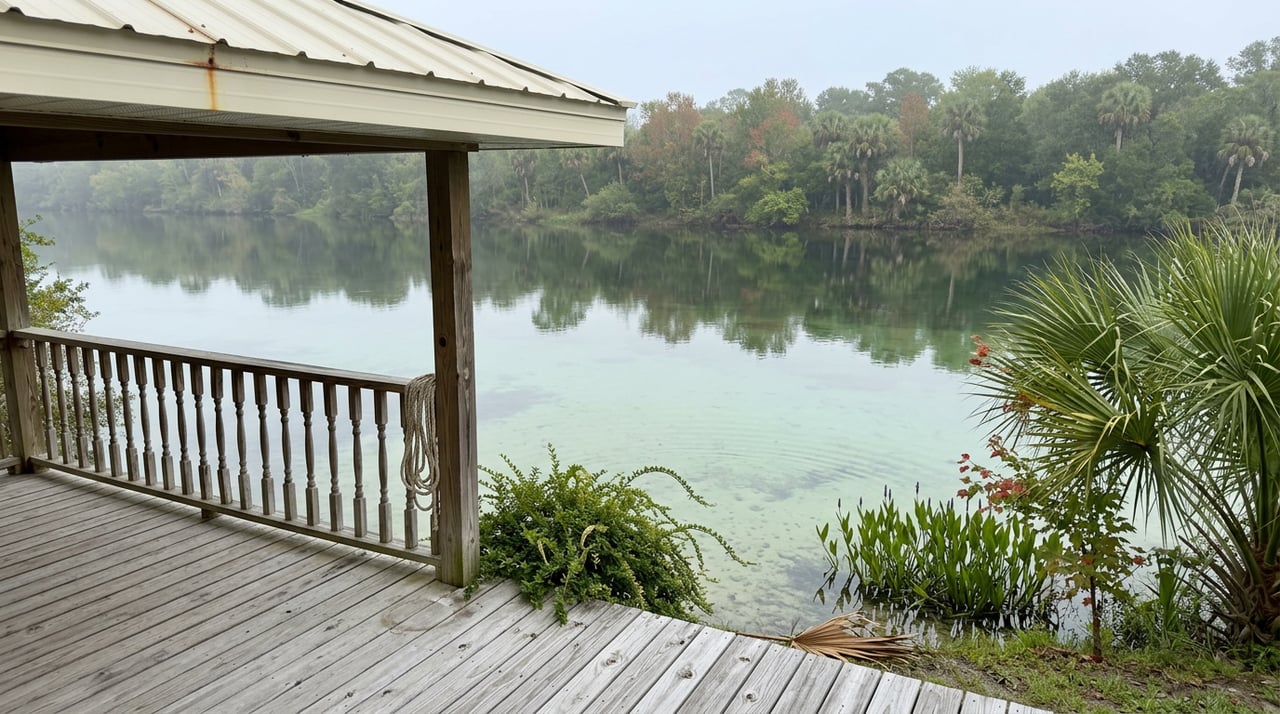
If the parcel is waterfront or near the water, confirm whether wetlands, other surface waters, shoreline stabilization issues, or coastal construction rules apply. Construction in or over wetlands or other surface waters may require Environmental Resource Permit authorization.
If wetlands are uncertain, ask whether a professional delineation or formal determination makes sense during your due-diligence period. Florida DEP states that formal determinations are legally binding while valid and are processed through the appropriate DEP district office or water management district.
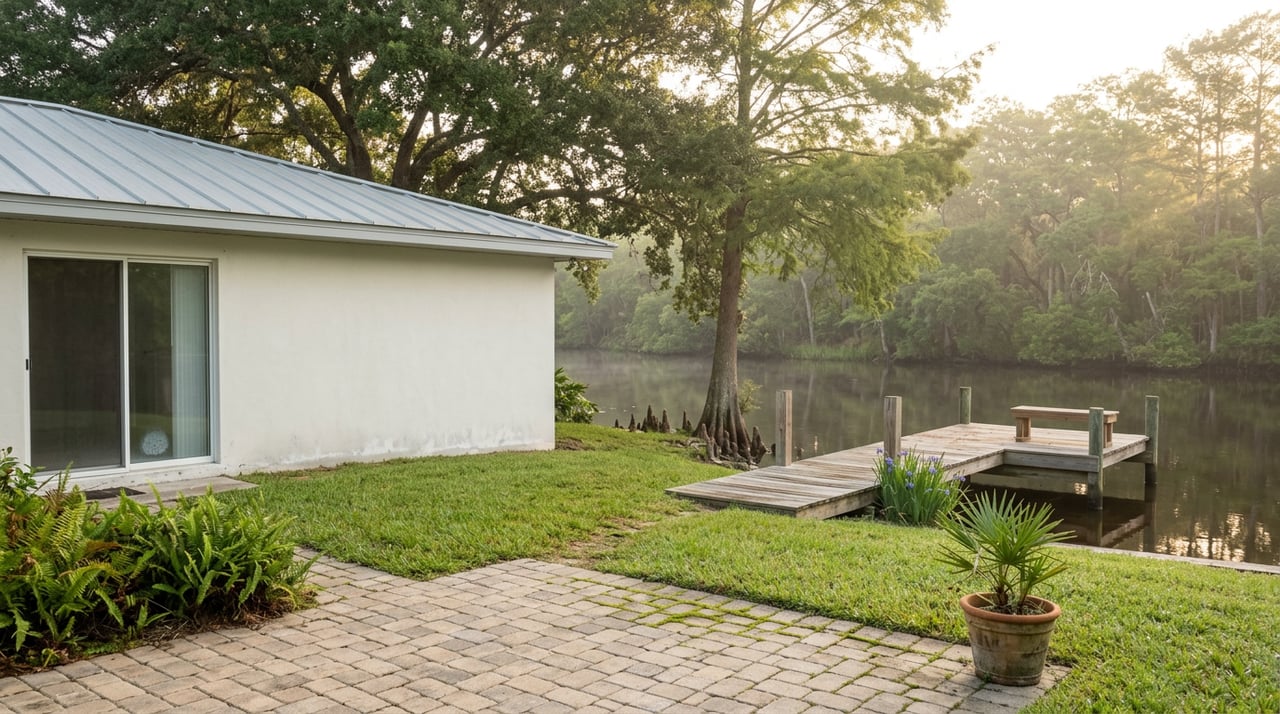
Shoreline improvements are not one-size-fits-all. Florida DEP notes that projects such as docks, seawalls, riprap, and other stabilization work may require different levels of authorization depending on the site.
If stabilization is needed, ask about living shorelines as well as seawalls. DEP identifies living shorelines as a natural-bank-stabilization alternative, and some smaller projects may qualify for a permit exemption.
If the parcel is seaward of the coastal construction control line, verify that status early and request the affidavit or survey typically addressed in the Florida vacant-land contract. This is the kind of issue that can change your plans if it surfaces too late.
Utilities can make or break a land purchase. Start by confirming whether public water and sewer actually reach the parcel, rather than assuming they do because nearby properties appear improved.
If public service is not available, you need to know whether the site can support a private well and onsite sewage system. In much of Florida, county health departments still handle septic permitting and inspections, while some counties fall under DEP administration.
For septic, the Florida Department of Health offers a voluntary homebuyer inspection form that can serve as a useful model for pre-closing review. If there is an existing system, ask about age, condition, and service history.
For wells, Florida does not require statewide testing of a private home well at sale, but the Department of Health strongly recommends annual testing for bacteria and nitrate. If a well already exists, ask about testing results and maintenance history before closing.
A beautiful parcel can still come with limits that affect how you use it. Review the deed, plat, recorded covenants, easements, and any association documents before your due-diligence period ends.
This is also where conservation easements matter. The Southwest Florida Water Management District notes that conservation easements are recorded in county public records, can permanently restrict use, and are often placed over natural areas as part of stormwater-management permitting.
If the parcel is in an HOA, owners must comply with the governing documents. Estoppel certificates are commonly used before closing to confirm amounts due and any open violations.
On a North Central Florida land or waterfront purchase, due diligence usually crosses several specialties. That is why timing matters just as much as the checklist itself.
At a minimum, buyers should coordinate with the title or closing professional, surveyor, insurance agent, and, when needed, county planning staff, environmental consultants, engineers, and well or septic contractors. The goal is not to overcomplicate the purchase. The goal is to make sure the key people are talking before your due-diligence window closes.
Some warning signs deserve quick follow-up because they can affect buildability, financing, insurance, or long-term usability.
None of these automatically kills a deal. They do mean you need answers before moving forward.
Buying land or waterfront property is often less about speed and more about sequencing. The right next step depends on what the last answer revealed, whether that is flood exposure, legal access, wetland concerns, or utility feasibility.
That is where calm, organized guidance adds value. A strategic agent helps you keep the due-diligence timeline on track, line up the right specialists, and spot conflicts early so you can make a clear decision with fewer surprises.
If you are considering land or waterfront property across North Central Florida and the Nature Coast, working with an advisor who understands how these pieces fit together can help you move forward with more confidence. When you are ready for a clear, protective approach to your next purchase, connect with Melissa Connell.
Stay up to date on the latest real estate trends.
I provide strategic assistance with pricing analysis, offer preparation, contract drafting, and negotiation ensuring every decision is informed and advantageous. Let’s begin the conversation.
Get In Touch With Palm & Pine Realty Group To Learn More
PALM & PINE REALTY GROUP
(813) 478-3180
[email protected]
Office - [email protected]
Sellers - [email protected]
Buyers - [email protected]
CENTRAL & NORTH CENTRAL FLORIDA