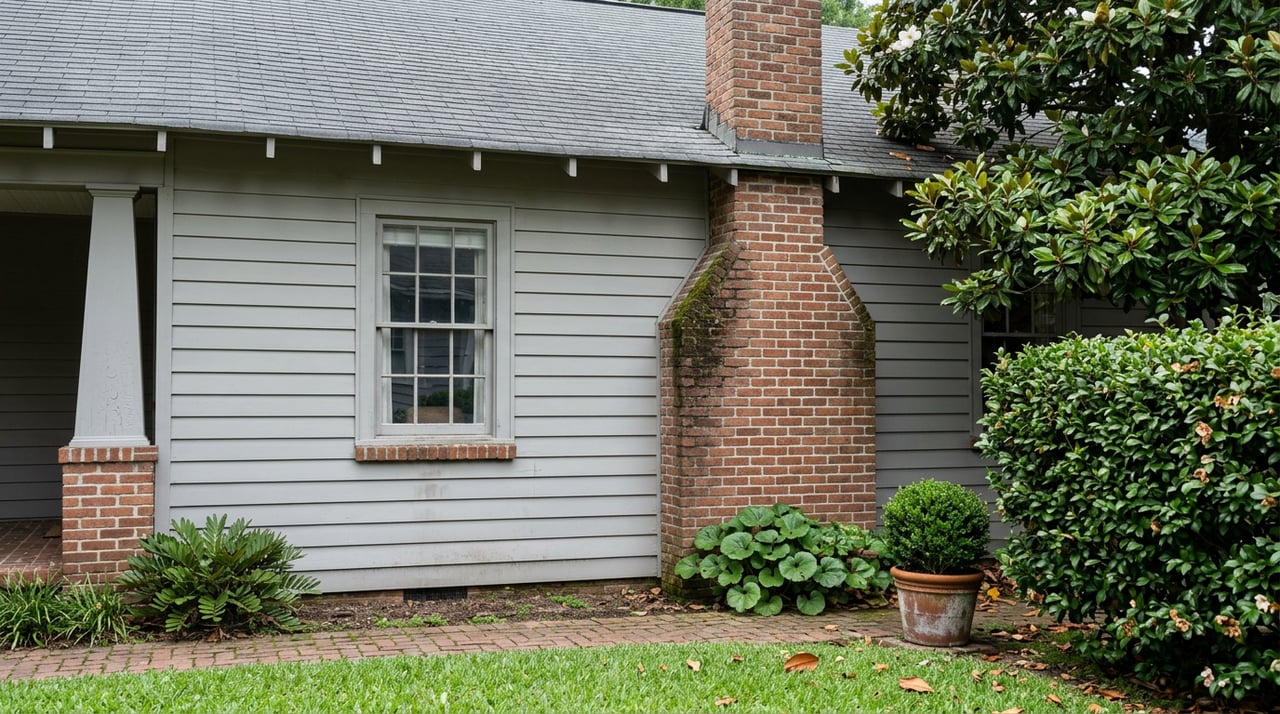
In Lakeland's Historic Districts, "Non-Contributing" Doesn't Mean No Rules
August 13, 2026
August 13, 2026
If you own a home in one of Lakeland's seven historic districts and you're getting ready to list, here's a question worth asking before you call a fence company or a roofer: does it matter whether the city classifies your house as "contributing" or "non-contributing"?
Most owners assume it does. A contributing home, the story goes, gets the historic-preservation scrutiny, and a non-contributing one gets a pass. That assumption is wrong, and it's the kind of wrong that can cost you weeks on a pre-listing renovation timeline if you don't catch it early.
Lakeland's seven historic districts, Beacon Hill, Dixieland, South Lake Morton, East Lake Morton, Lake Hunter Terrace, Biltmore/Cumberland, and Munn Park, cover six residential areas and one commercial corridor, all clustered in the central city. Every structure inside those boundaries, whether the city's survey team flagged it as contributing or non-contributing, is subject to the same design review process before you touch the exterior. The city's own FAQ on the historic district resurvey is direct about this: the only real difference is that reviewers check a contributing property's changes against compatibility with the district's character a bit more closely. A non-contributing garage still needs the same Certificate of Review as a contributing bungalow if you're replacing the fence or adding a shed.
That matters most in the weeks before a listing goes live, when sellers tend to knock out small exterior projects to make a house show well. If you're inside one of these seven districts, "small" doesn't mean "unregulated."
Design review and a Certificate of Review are required before starting any project that alters the exterior of a building in a historic district, new construction, relocation of a historic building, or demolition. The city's design review page splits projects into two tracks, and the track determines how fast you can move.
| Project scope | Who approves it | Typical examples |
|---|---|---|
| Minor | Historic Preservation Planner, staff-level, no hearing required | Fences, sheds, swimming pools, window/door replacement, roof replacement |
| Major | Design Review Committee, requires a hearing | Additions, new construction, demolition, building relocation |
A minor project can move relatively quickly because a planner can issue the Certificate of Review directly. A major project has to wait for the Design Review Committee, which meets on the fourth Thursday of the month at 8:30 a.m. at City Hall, except in November and December, when the meeting shifts to the third Thursday because of the holidays. Miss a meeting date by a week and you're waiting nearly a month before the committee even looks at your project, and that's before a building permit gets involved. Most exterior work in the historic districts still needs a separate building permit in addition to the Certificate of Review, though minor repairs done with matching original materials are sometimes exempt.
There's one genuine bit of good news here for sellers staging a home: there's no citywide restriction on paint colors for existing residential structures in the historic districts. If your pre-listing plan is a fresh coat of paint, that part doesn't need a Certificate of Review at all.
Two houses on the same block, one built in 1948, one built in 1998. The city reviews their fences, their roofs, and their windows the same way.
That's the part most owners don't expect, and it's the reason "am I contributing?" is the wrong first question. The right first question is "what am I changing, and is it minor or major?"
Fences are a good example of why timing matters. As of November 20, 2025, the city no longer allows 6-foot-tall white vinyl privacy fences with a shiny finish in the historic districts. A neutral-colored, matte-finish version of the same fence may still be approved, but it's considered case by case rather than automatically.
If you're a seller planning to install a new privacy fence before listing, that's a specific, dated rule that could send a straightforward staff-level review back for revisions if the material or finish doesn't match current guidance. It's a small detail with a real consequence: a denied application means reordering materials and resubmitting, which stretches a project that should take days into one that takes weeks, right when you're trying to get photos taken and a listing live.
Here's the part that surprises sellers most: your home's contributing or non-contributing status was assigned at a point in time, and the city is actively re-checking it, district by district.
Lakeland's Historic Preservation Board began resurveying all seven historic districts in 2021. In 2022, the city received a $50,000 matching grant from the Florida Division of Historical Resources to fund the first phase of what's planned as a three-phase project. PaleoWest LLC, a cultural resources firm based in St. Petersburg, completed the Phase 1 resurvey, focused on the East Lake Morton and South Lake Morton Historic Districts, with a final report issued in 2023. That resurvey didn't just confirm the existing map. It recommended expanding both districts' periods of significance, from 1900 to 1940 for East Lake Morton and from 1904 to 1935 for South Lake Morton, out to 1900 through 1973 for both, and it recommended adding the Florida Citrus Mutual Building as a newly contributing resource.
Phase 2 is now underway with a different consultant, Ardurra, covering the remaining districts. If your home sits in Beacon Hill, Dixieland, Lake Hunter Terrace, Biltmore/Cumberland, or Munn Park, a resurvey hasn't necessarily reached your block yet, but it's coming. And if it lands while your home is under contract, a status that was settled when you signed the listing agreement might not be settled by closing.
The city's FAQ is clear that classification decisions aren't appealable, and that surveyors work from the public right of way and don't need to access private property to make their determination. What you can do is ask. Historic Preservation staff will tell you what the survey team noted about your specific address if you reach out before you list, not after a buyer's agent asks the question for you.
For sellers inside any of the seven districts, the practical sequence looks like this:
None of this changes the fundamentals of pricing or marketing a historic district home. It changes the runway you need before the "For Sale" sign goes up.
Does a non-contributing home skip design review? No. Every structure in the seven districts, contributing or not, goes through the same Certificate of Review process for exterior changes. The review simply weighs a contributing property's changes more closely against the district's overall character.
Can I paint my house any color before listing? Yes. There's no citywide restriction on exterior paint colors for existing residential structures in Lakeland's historic districts.
What if my home's classification changes while it's on the market? Contact Historic Preservation staff directly and ask what the survey team noted about your address. Classification decisions aren't appealable, but knowing your status early lets you plan renovation and listing decisions with accurate information instead of an outdated assumption.
How long does a Certificate of Review actually take? Minor projects, like fences, sheds, or roof replacement, can be approved at the staff level without a hearing. Major projects, like additions or new construction, need to go before the Design Review Committee, which meets on the fourth Thursday of the month (third Thursday in November and December).
If you're weighing an exterior project before listing a home in one of Lakeland's historic districts, or you're trying to figure out what a home's contributing status actually means for your timeline, Melissa Connell, Florida license BK3072450, walks clients through exactly this kind of process detail before it becomes a delay. Let's Connect.
Stay up to date on the latest real estate trends.

I provide strategic assistance with pricing analysis, offer preparation, contract drafting, and negotiation ensuring every decision is informed and advantageous. Let’s begin the conversation.
Get In Touch With Palm & Pine Realty Group To Learn More
PALM & PINE REALTY GROUP
(813) 478-3180
[email protected]
Office - [email protected]
Sellers - [email protected]
Buyers - [email protected]
CENTRAL & NORTH CENTRAL FLORIDA