The Nature Coast's New Flood Insurance Rule Isn't About Your Flood Zone. It's About Your Price Tag.
September 17, 2026
September 17, 2026
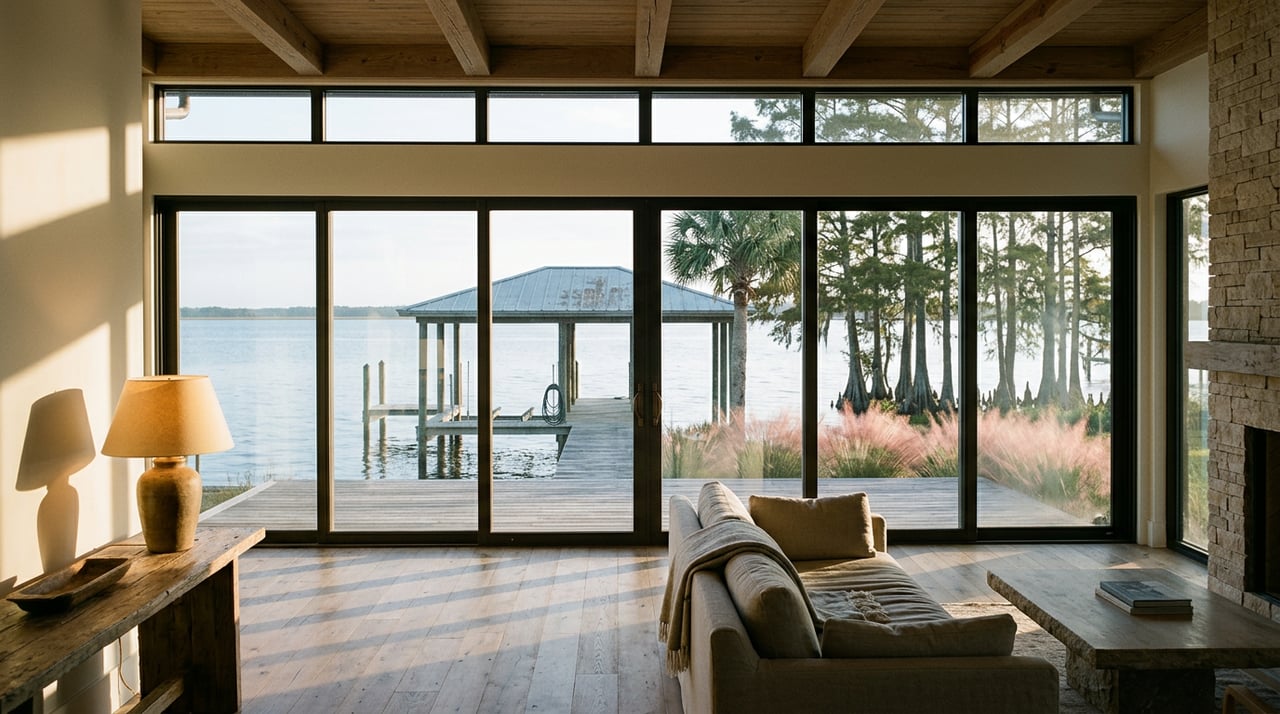
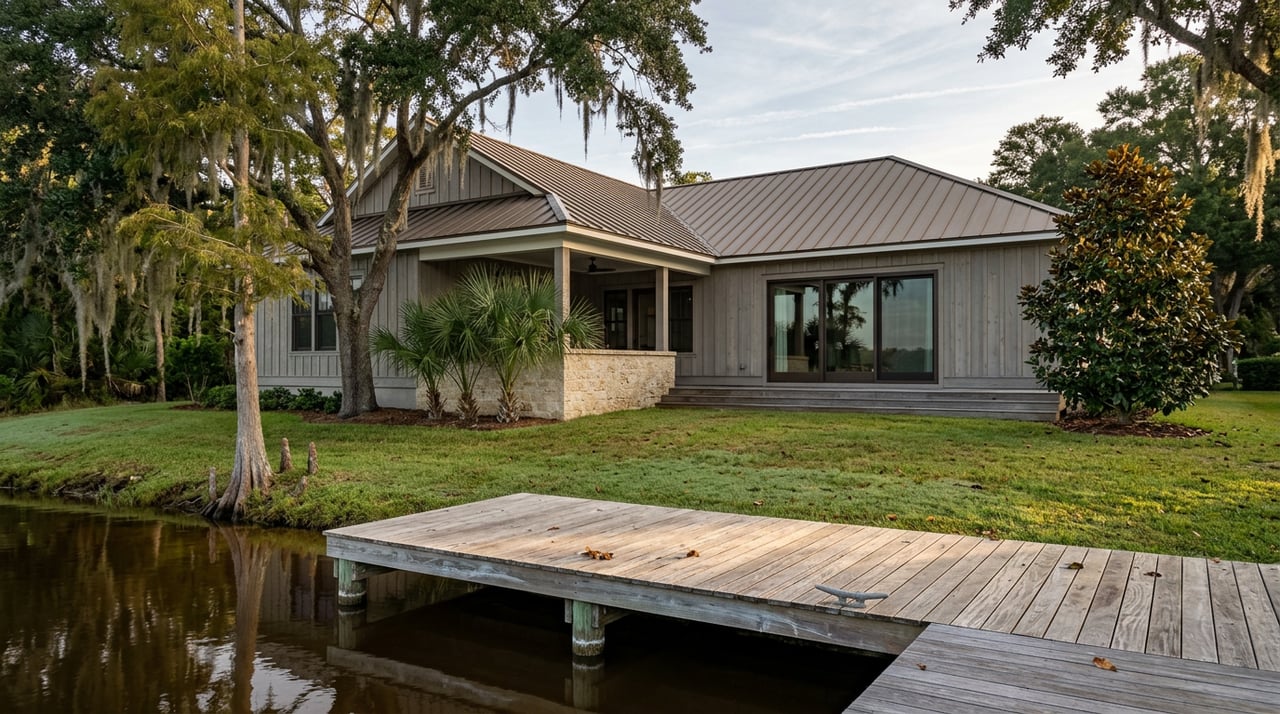
Picture two homes on the same stretch of water in Citrus County. Same canal, same view, same rough square footage. One is a 1978 block home that hasn't been touched since a modest kitchen update in the 1990s. The other sits two lots down, gutted and rebuilt three years ago with a new roof, impact windows, and a raised foundation.
Under Florida's new Citizens flood insurance rule, these two nearly identical-looking properties can land on opposite sides of a mandatory flood insurance requirement, and flood zone has nothing to do with it.
That is the detail most buyers researching Crystal River, Homosassa, or Dunnellon waterfront miss, because almost every guide on this subject tells you to start with your flood zone. Zone matters. But as of January 1, 2026, it is not the trigger that decides whether Citizens Property Insurance requires you to carry a separate flood policy. The trigger is your home's Coverage A value, the estimated cost to rebuild it, and that threshold applies even in Zone X, the zone most buyers assume is the safe one.
Citizens Property Insurance Corporation, Florida's state-created insurer of last resort, has been phasing in a flood insurance requirement since 2023 under a law the Legislature passed in December 2022. The early phases applied mainly to properties inside a FEMA-designated Special Flood Hazard Area. That part felt intuitive. If your home sits in a high-risk zone, of course the insurer wants proof you're covered for water damage a standard policy excludes.
The phase that took effect January 1, 2026 changed the logic. Citizens now requires flood insurance for personal residential policies with wind coverage once the dwelling's Coverage A value hits $400,000, regardless of flood zone, including Zone X. By January 1, 2027, the requirement extends to every Citizens personal residential policyholder with wind coverage, no value threshold needed at all.
Coverage A is not your home's market price. It's the estimated cost to rebuild the structure from the ground up, and on the Nature Coast, where labor and materials for waterfront construction run high, that rebuild estimate can cross $400,000 well before the sale price does. A modest-looking three bedroom canal home with a newer roof, updated systems, and current construction costs baked into its replacement estimate can trigger the mandate even sitting in the same Zone X pocket as a neighbor whose older, lower-value home does not.
This is why the two hypothetical homes on that canal split apart. The 1978 house, never substantially updated, likely carries a lower Coverage A estimate. The rebuilt one, three years old with current materials and code-compliant systems, almost certainly does not. Same water. Same risk on paper. Different mandate.
Citrus County's own flood zone breakdown shows how unevenly this plays out even within a few miles. Kings Bay, the Crystal River waterfront, and Three Sisters Springs sit in higher-risk designated zones, along with the Crystal Shores, Dixie Shores, and Woodland Estates neighborhoods. Higher-elevation pockets like Meadowcrest and Connell Heights carry different exposure entirely, even though they're part of the same city. Zone AE, VE, or A designations cluster most heavily near Crystal River, Homosassa, Ozello, and the Rainbow and Withlacoochee river corridors, the same corridors that draw buyers to Dunnellon for river access.
None of that geography changes the $400,000 Coverage A rule. A high-value rebuild in a lower-risk Meadowcrest lot can trigger the mandate just as easily as one in flood-prone Kings Bay. The rule runs on rebuild cost, not elevation.
Citrus County's entire coastline is classified as a Coastal High Hazard Area, a fact the county states plainly on its own floodplain management pages. That designation shapes building and rebuild requirements after storm damage, but it doesn't map neatly onto insurance cost either. As of early 2026, Citrus County's average flood insurance premium runs close to $1,589 a year, higher than many inland Florida counties, though the county's participation in the National Flood Insurance Program's Community Rating System gives residents a built-in discount lever that some neighboring counties don't offer.
There's a second wrinkle worth knowing if you're eyeing an older home instead of new construction. Pre-1975 properties, from before the NFIP existed in any functional form, sometimes sit above current base flood elevation requirements simply because building practices decades ago put the first floor higher than today's minimums assume. An elevation certificate on one of these older homes can occasionally work in the buyer's favor, showing the structure clears the base flood elevation even though the home's age might suggest otherwise. Assuming an old house is automatically the riskier bet is exactly the kind of shortcut this rule punishes.
One piece of local infrastructure makes this easier to check than it used to be. Citrus County's Floodplain Management office launched an online hazard risk portal ahead of the 2025 hurricane season, built in partnership with geospatial platform Forerunner. The stated purpose is to give residents, real estate professionals, and insurers direct access to flood zone data and elevation certificates without routing every request through a records office, and the tool remains the county's current resource for pulling that data today.
That portal matters here because the two facts a buyer actually needs, the flood zone and the elevation certificate history, are no longer buried behind a phone call and a wait. For a waterfront purchase where the insurance mandate hinges on a rebuild-cost number your insurer calculates separately from the county's flood data, having both pieces in hand before you write an offer means fewer surprises during underwriting.
Ask for the Coverage A estimate, not the list price. If the seller has current homeowners coverage, the declarations page shows the dwelling replacement value insurers are using right now. That number, not the sale price, is what decides whether the $400,000 threshold applies.
Pull the flood zone directly. Use FEMA's Flood Map Service Center to confirm the zone for the specific address. Don't rely on a neighbor's zone or a general sense of the area, Citrus County's own data shows zones can shift block to block.
Request the elevation certificate, if one exists. For older homes especially, this document can reveal whether the structure sits above base flood elevation, which affects both insurability and premium.
Check whether the seller's policy is with Citizens or a private carrier. The $400,000 threshold rule applies specifically to Citizens personal residential policies with wind coverage. A private carrier may structure requirements differently, so confirm which insurer is in play before assuming the mandate applies.
Get a property-specific quote before closing, not after. Flood insurance carries a standard 30-day waiting period before coverage begins. Waiting until days before closing to shop for a policy can delay the transaction.
Ask your lender which rule governs your loan. Federally backed mortgages have their own flood insurance requirements tied to Special Flood Hazard Area designations, separate from the Citizens mandate. If your loan is federally backed and the property sits in an SFHA, flood coverage is likely required regardless of Coverage A value.
Does this mandate apply if I'm paying cash? The Citizens threshold rule applies to Citizens personal residential policies carrying wind coverage. A cash buyer isn't subject to a lender's flood insurance requirement, but if you carry a Citizens policy for wind coverage and your home's Coverage A hits $400,000, the flood requirement still applies to keep that policy in force.
Does being in Zone X protect me from this rule? No. That's the core shift as of January 1, 2026. The threshold applies regardless of flood zone, including Zone X, once Coverage A reaches $400,000.
What happens by 2027? The value threshold disappears entirely. By January 1, 2027, every Citizens personal residential policyholder with wind coverage will need a flood policy, regardless of dwelling value or flood zone.
If I already carry an NFIP policy, am I covered? An existing NFIP flood policy generally satisfies the requirement as long as the coverage amount meets your dwelling limit up to the NFIP's $250,000 cap. Confirm the specifics with your agent, since private flood policies are also accepted if they meet the coverage requirements.
Waterfront property on the Nature Coast still comes down to the same fundamentals it always has: access, elevation, and what the water actually does at your specific address across the seasons. What's changed is which number decides your insurance obligation, and it's not the one most buyers think to ask about first.
If you're comparing waterfront listings across Crystal River, Homosassa, or Dunnellon and want a second set of eyes on how a specific property's Coverage A estimate and flood zone interact before you write an offer, Palm & Pine Realty Group is glad to walk through it with you. Let's Connect.
Stay up to date on the latest real estate trends.
I provide strategic assistance with pricing analysis, offer preparation, contract drafting, and negotiation ensuring every decision is informed and advantageous. Let’s begin the conversation.
Get In Touch With Palm & Pine Realty Group To Learn More
PALM & PINE REALTY GROUP
(813) 478-3180
[email protected]
Office - [email protected]
Sellers - [email protected]
Buyers - [email protected]
CENTRAL & NORTH CENTRAL FLORIDA