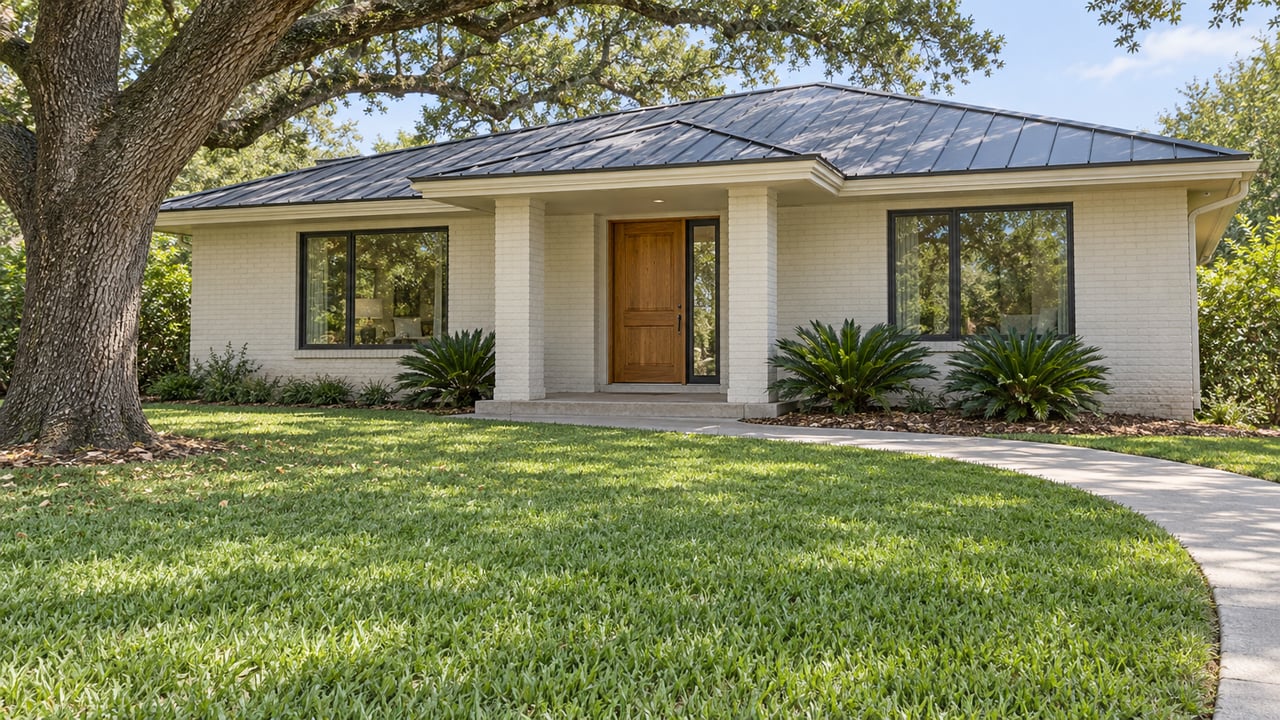
In Dade City, Three Separate Lines Set a Home's Yearly Bills
November 12, 2026
November 12, 2026
Two homes can both list "Dade City" as their address and still be billed by different governments. One may be inside the City of Dade City. The other may be in unincorporated Pasco County, even though it shares the same post office and ZIP code. A listing rarely shows which one you are looking at, and the difference turns up on the tax bill, the trash bill and the water bill.
Those three bills don't follow one map. The city limit sets the property tax rate and decides who picks up the garbage. Water and sewer follow a service area drawn under a 2010 agreement between the county and the city, and that area reaches past the city limit into unincorporated land. When you compare listings around Dade City, you are checking three boundaries, and two homes a mile apart can land on different sides of each one.
The Pasco County Property Appraiser certified the 2026 tax roll on October 6, 2026, and its published millage table gives a total rate for each taxing area. These are the three areas that matter for a Dade City address:
| 2026 tax area | Total millage | Per $100,000 of taxable value |
|---|---|---|
| Dade City | 22.5236 | about $2,252 |
| Unincorporated Pasco, fire district | 16.6966 | about $1,670 |
| Unincorporated Pasco, no fire district | 14.4292 | about $1,443 |
Fire service doesn't explain the gap. In Pasco's 2026 table, the Dade City area and the unincorporated fire area both carry the county's 2.2674-mill Municipal Service Fire District levy. The real difference comes from two lines. The city levies 6.2322 mills of its own. Unincorporated parcels pay a 0.4052-mill County Roads MSTU that the city area doesn't. Subtract one from the other and you get about 5.83 mills between a city parcel and an unincorporated parcel in the fire district. That works out to roughly $583 a year for every $100,000 of taxable value.
The city's rate came in lower than first proposed. A July 2026 Hernando Sun report said 6.6208 mills was expected to appear on TRIM notices, with a possible rolled-back rate. On September 29, 2026, commissioners adopted the rolled-back rate with the city's FY 2026–27 budget, which runs from October 1, 2026, through September 30, 2027. On the county side, the Board of County Commissioners adopted its 7.2488-mill operating rate, the fire levy and the roads levy on September 22, 2026, in Resolution 26-399.
Because the gap scales with taxable value, it grows with the price. The seller's last tax bill is only a starting point. It shows which tax area the parcel sits in, and that tax area carries over to you.
Garbage service follows the city limit too, but each side pays for it differently.
Inside the city, residential collection is a city service at a city rate. On July 14, 2026, commissioners passed Ordinance 2026-15 on second reading by a 5–0 vote, raising the residential collection fee from $15.26 to $20 a month. The ordinance took effect when it was adopted, so a city home now carries $240 a year for trash pickup.
Outside the city, the county doesn't send a truck. Pasco County's garbage and recycling page says the county doesn't pick up residents' trash and that residents contract with a licensed hauler for curbside service. That cost is set by your hauler contract, not by an ordinance. When you compare a city home with an unincorporated one, ask the seller of the unincorporated home which hauler they use and what they pay, then set that next to the city's $20.
The water boundary doesn't match the first two.
In 2010, Pasco County and the City of Dade City signed an interlocal agreement that created a City of Dade City Utility Service Area, which covers unincorporated land. Water and wastewater customers inside that area count as customers of the city's system, and the county agreed not to extend its own water or sewer lines there unless the city couldn't or wouldn't serve a property. As a result, a home can pay county property taxes, hire its own trash hauler and still get its water bill from the City of Dade City.
The same agreement limits what those outside customers can be charged. The city agreed not to charge its unincorporated service-area customers more for water or wastewater, or for related fees, than Pasco County charges its own customers for similar service. The one exception is a rate applied uniformly across the entire city system. The agreement runs 25 years from county approval. The county's rates set the ceiling, so here they are. Pasco County Utilities rates for fiscal 2027 took effect October 1, 2026. For a standard 5/8-inch or 3/4-inch residential meter:
The water tiers climb steeply. Above 15,000 gallons a month, each 1,000 gallons costs about four times the first tier. That matters for a larger lot where irrigation is on the household meter.
The city sets its own water and sewer rates. Before you compare monthly costs, get the current figures for the exact address from the city's utility billing office. Other providers serve parts of the county as well. Pasco's utility account page tells residents to look up their provider by address, parcel or name in PascoMapper rather than assume it, and the county's service-area map lists Dade City Utilities and Pasco County Utilities among several municipal and private providers.
At the southwest corner of U.S. 301 and Clinton Avenue, the utility line is already in place and the city limit may follow.
The Hernando Sun reported that in late July 2026, commissioners voted 4–1 to approve a pre-annexation agreement for the Maggard Project. It covers 92.6 acres of unincorporated land that the property owners want voluntarily annexed into the city. Tentative plans call for slightly more than 800 single-family lots and 330,000 square feet of commercial space. The land is already in the city's utility service area and is to be served by city water and wastewater. The city has already agreed to serve an initial 100,000 square feet of commercial use, and anything beyond that requires a utility service agreement.
A pre-annexation agreement doesn't annex the land. According to the same report, the owners will file their annexation request later, and that request, along with land-use and zoning changes, has to go through public hearings before the city commission. So when you look at land or homes near that corner, the three lines are at different stages. The water line already covers the parcels. The city limit could move toward them through a public process. The tax area moves only if annexation is approved.
Run these three checks on each address, and do it before you compare prices. Neither the price nor the ZIP code can tell you the answers.
Once you have all three, the "Dade City" label on both listings stops mattering, and you can compare what each house will actually cost to carry.
Does a Dade City mailing address mean I pay Dade City taxes? No. The mailing address comes from the post office. Your tax area depends on whether the parcel is inside city limits, and Pasco's 2026 table taxes the Dade City area and unincorporated areas at different total rates.
If a home is on city water, is it inside the city? Not necessarily. Under the 2010 interlocal agreement, the city's utility service area includes unincorporated land, so a home outside city limits can still be a city utility customer.
Would annexation change a home's tax bill? A home that becomes part of the city moves into the Dade City tax area, which carries the 6.2322-mill city levy and drops the county roads levy. The Maggard Project shows that this starts with a request and public hearings, not with the pre-annexation vote.
This post is general information, not legal, tax or financial advice. Please confirm the details for a specific property with the Property Appraiser, the utility provider and your own tax or legal professional.
If you're comparing homes around Dade City and want each address checked against all three lines before you write an offer, Palm & Pine Realty Group can pull the tax area, trash arrangement and utility provider for each property and set them side by side. Let's Connect.
Stay up to date on the latest real estate trends.
I provide strategic assistance with pricing analysis, offer preparation, contract drafting, and negotiation ensuring every decision is informed and advantageous. Let’s begin the conversation.
Get In Touch With Palm & Pine Realty Group To Learn More
PALM & PINE REALTY GROUP
(813) 478-3180
[email protected]
Office - [email protected]
Sellers - [email protected]
Buyers - [email protected]
CENTRAL & NORTH CENTRAL FLORIDA